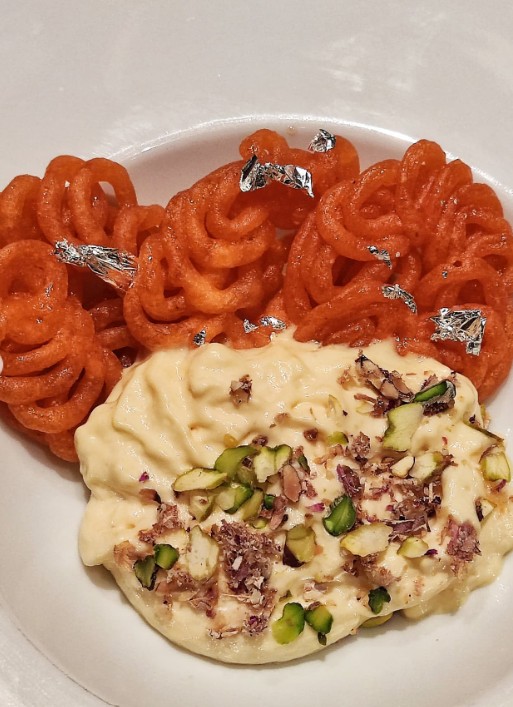
Delightful Imarti and Creamy Rabdi: A Perfect Indian Sweet Pairing
Have you ever wondered about the similarities between jalebi and imarti? Both are beloved Indian sweets that are not only waxed and fried but also soaked in sweet syrup. Their textures and flavors make them a much-loved treat across households. Today, we will focus on making imarti, a delicious lentil-based sweet, paired with creamy rabdi, a rich milk dessert.
Ingredients
For Imarti:
- 1 cup urad dal (split black gram)
- Ghee or oil for frying
- Orange food coloring or saffron-infused water (optional)
For Rabdi:
- 1 liter full-fat milk
- 1/2 cup sugar (adjust to taste)
- Cardamom powder (to taste)
- Chopped pistachios (for garnish)
- Desi ghee for greasing the kadhai
For Sugar Syrup:
- 2 cups sugar
- 2 cups water
Step-by-Step Method
Prepare the Rabdi
- Start by selecting an iron kadhai for making rabdi. Avoid using aluminum or bronze as it can alter your milk’s color. Grease the kadhai with desi ghee to prevent milk from burning or sticking.
- Pour 1 liter of full-fat milk into the kadhai and bring it to a boil over medium heat.
- While waiting for the milk to boil, set up your imarti batter by soaking 1 cup of urad dal in water for 3-4 hours.
- Drain the soaked dal and grind it into a fine, smooth paste without any graininess.
- Once the milk has boiled, use a wooden skewer to gently push the cream that forms towards the edges. Continue this process for another 7-8 minutes until a thick layer of cream collects on the sides.
Make Sugar Syrup
- In another pot, combine 2 cups of sugar and 2 cups of water. Heat it until it reaches a one-string consistency and then set it aside.
Prepare the Imarti Batter
- Whisk the imarti batter with your hands or an electric whisk until it becomes airy. To test if it’s ready, drop a small amount into a bowl of water; if it floats, it’s ready.
- Optionally, add some orange food coloring or saffron-infused water to get that classic golden hue.
- Transfer the batter into a piping bag or milk packet for easy shaping.
Frying Imartis
- Heat ghee in the kadhai over medium heat. Practice shaping the imartis by making two circles on a plate first. Once comfortable, pipe the batter into the hot ghee in concentric circles.
- Fry until golden, then flip carefully and cook both sides until crisp. Use the bubbling of the oil to gauge doneness; once the bubbling subsides, they are ready to be removed.
- Soak the imartis in warm syrup briefly for about 3-4 minutes to infuse sweetness.
Finalizing Rabdi
- As your rabdi reduces and thickens, add 1/2 cup of sugar and mix in cardamom powder for flavor. Ensure the sugar dissolves well and the cream collected on the side is incorporated back into the milk.
- Garnish with chopped pistachios as desired.
Cooking Tips & Variations
Imartis can also be flavored with kesar (saffron) or colored with food dyes, bringing variety to their appearance. For a crunchier texture, consider using a mix of vanaspati and ghee for frying.
Serving Suggestions
Serve the warm imartis drizzled with syrup alongside chilled rabdi for a delightful dessert experience. This combo will surely impress any guest!
Storage Instructions
Both imartis and rabdi can be stored in the refrigerator for up to 3 days. However, it’s best to serve imartis fresh, reheating them in warm syrup before serving if left over.
Nutrition Information
Imarti and rabdi are rich in calories mainly due to sugar and ghee, making them indulgent treats. Moderation is key when enjoying these delicious sweets.
FAQs
What is the main ingredient in imarti?
Imarti is primarily made from urad dal, which gives it a unique texture and flavor.
Can I use other lentils instead of urad dal?
While traditional imarti uses urad dal, other lentils may not yield the same results in texture or taste.
What is rabdi made from?
Rabdi is made from full-fat milk, which is boiled down to create a rich, creamy dessert.
How do I ensure my rabdi does not burn?
Using an iron kadhai and greasing it well with ghee can help prevent burning.
What should I serve with imarti?
Imarti is best served with rabdi for a classic combination that balances sweetness and texture.
Can I make imarti in advance?
Yes, you can fry imartis ahead of time and soak them in syrup just before serving.
Is there a vegan alternative for rabdi?
You can make a vegan version using coconut milk or almond milk for a different flavor.
What thickness should the rabdi be?
Rabdi should be thick enough to coat the back of a spoon, indicating it has reduced adequately.
Can I add flavors to my rabdi?
Absolutely! Cardamom and saffron are popular choices for enhancing the flavor.
Why does my imarti not hold shape?
Ensure that your batter is whipped adequately and the frying oil is at the correct temperature to maintain shape.
