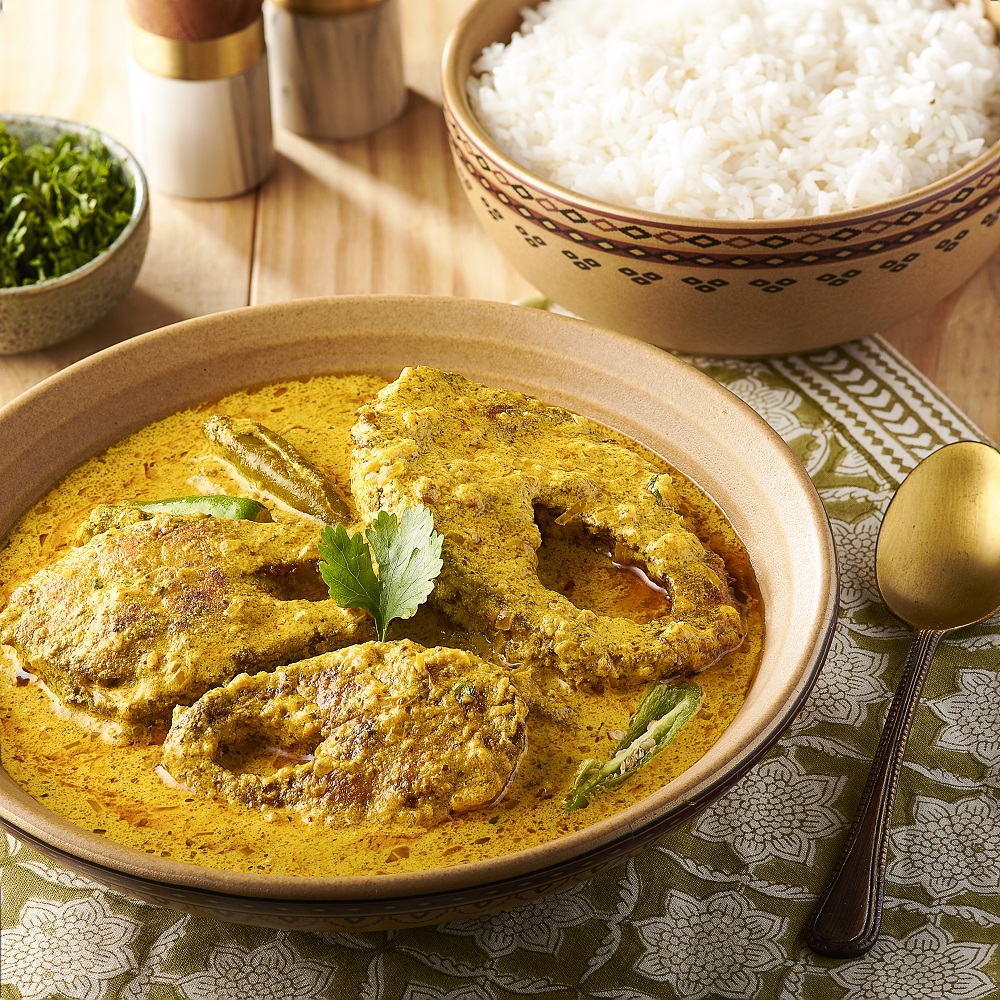
Delicious Bengali Fish Curry: A Fusion of Flavors
Fish curry is a beloved dish in many Indian households, particularly in Bengal, where it is a staple. This recipe combines traditional Bengali flavors with a unique twist, perfect for those looking to explore the culinary delight of Indian fish dishes.
Ingredients
- 500 grams Rohu fish (cut into pieces)
- 3 tablespoons mustard oil
- 2 medium-sized potatoes (peeled and cut into chunks)
- 1 large onion (finely chopped)
- 1 tablespoon ginger (finely chopped)
- 2-3 green chilies (slit)
- 1 teaspoon kalonji (nigella seeds)
- 1 teaspoon turmeric powder
- 1 teaspoon red chili powder
- 1 teaspoon cumin powder
- Salt to taste
- 1-2 cups of water
Short Introduction
Bengali Fish Curry, inspired by the culinary traditions of Bengal, showcases the rich flavors of mustard oil, spices, and of course, fresh fish. This dish offers a perfect balance between spices and the natural sweetness of the fish, making it a comforting meal.
Step-by-Step Method
- Marinate the Fish: Start by marinating the fish pieces with salt and turmeric for about 15-20 minutes. This will enhance the flavor and remove any fishy odor.
- Heat Mustard Oil: In a pan, heat mustard oil until it reaches its smoking point. This step is essential as it removes the raw flavor of the oil and infuses it with a delicious smoky aroma.
- Fry the Fish: Once the oil is hot, gently add the marinated fish pieces. Fry until they are golden brown on both sides. Remove them from the oil and set aside.
- Prepare the Base: In the same oil, add kalonji and let it sizzle for a moment. Then add chopped onions and sauté until they are translucent. Next, add ginger and green chilies, cooking them until fragrant.
- Add Spices: Now, add turmeric, red chili, and cumin powders to the onion mixture. Stir well to combine, allowing the spices to cook for a minute, releasing their flavors.
- Cook the Potatoes: Add the potato chunks to the pan, coating them with the spice mixture. Pour in water to create a gravy and sprinkle salt. Allow the potatoes to cook for about 10-15 minutes until they are tender.
- Combine Everything: Once the potatoes are cooked, add the fried fish pieces back into the pan. Gently mix them with the gravy, taking care not to break the fish. Let it simmer for another 5-10 minutes, allowing the fish to absorb the flavors.
- Serve Hot: Once done, remove from heat and let it sit for a few minutes before serving, which helps in enhancing the flavors further.
Cooking Tips & Variations
- You can substitute Rohu fish with any freshwater fish that you prefer, like Catfish or Tilapia.
- If you like it spicier, feel free to add more green chilies or a dash of chili powder.
- For a healthier version, try using less oil or opting for steaming the fish instead of frying.
Serving Suggestions
Serve the Bengali Fish Curry hot with steamed rice or chapati. It pairs well with a side of simple cucumber salad or a tangy chutney to balance the flavors.
Storage Instructions
Leftover fish curry can be stored in an airtight container in the refrigerator for up to 2 days. Reheat thoroughly before serving. Avoid freezing the curry, as the fish can get mushy when thawed.
Nutrition Information
- Calories: Approximately 400 per serving (based on a 200g serving)
- Proteins: 30g
- Fats: 25g
- Carbohydrates: 20g
- Fiber: 5g
FAQs
What type of fish is best for this curry?
Rohu fish is commonly used for this recipe, but any firm freshwater fish can work well.
Can I use frozen fish?
Yes, frozen fish can be used, but make sure to thaw it completely before marinating and cooking.
Is mustard oil necessary?
Mustard oil adds a distinct flavor; however, you can substitute it with vegetable oil if preferred.
Can I make this curry with other vegetables?
Yes, vegetables like eggplant or beans can also be added for variation.
How spicy is the curry?
You can adjust the spice level according to your taste by varying the amount of green chilies and chili powder.
How long can I store leftover curry?
It can be stored in the refrigerator for up to 2 days in an airtight container.
What can I serve with this curry?
It pairs well with steamed rice, flatbreads, or even boiled potatoes.
Can this recipe be doubled?
Yes, the recipe can be increased by simply multiplying the ingredients.
Should I use fresh or dried spices?
Fresh spices usually provide better flavor, but dried spices can be used if that’s what’s available.
Can I make this recipe vegetarian?
You could create a similar dish using paneer or tofu instead of fish.
