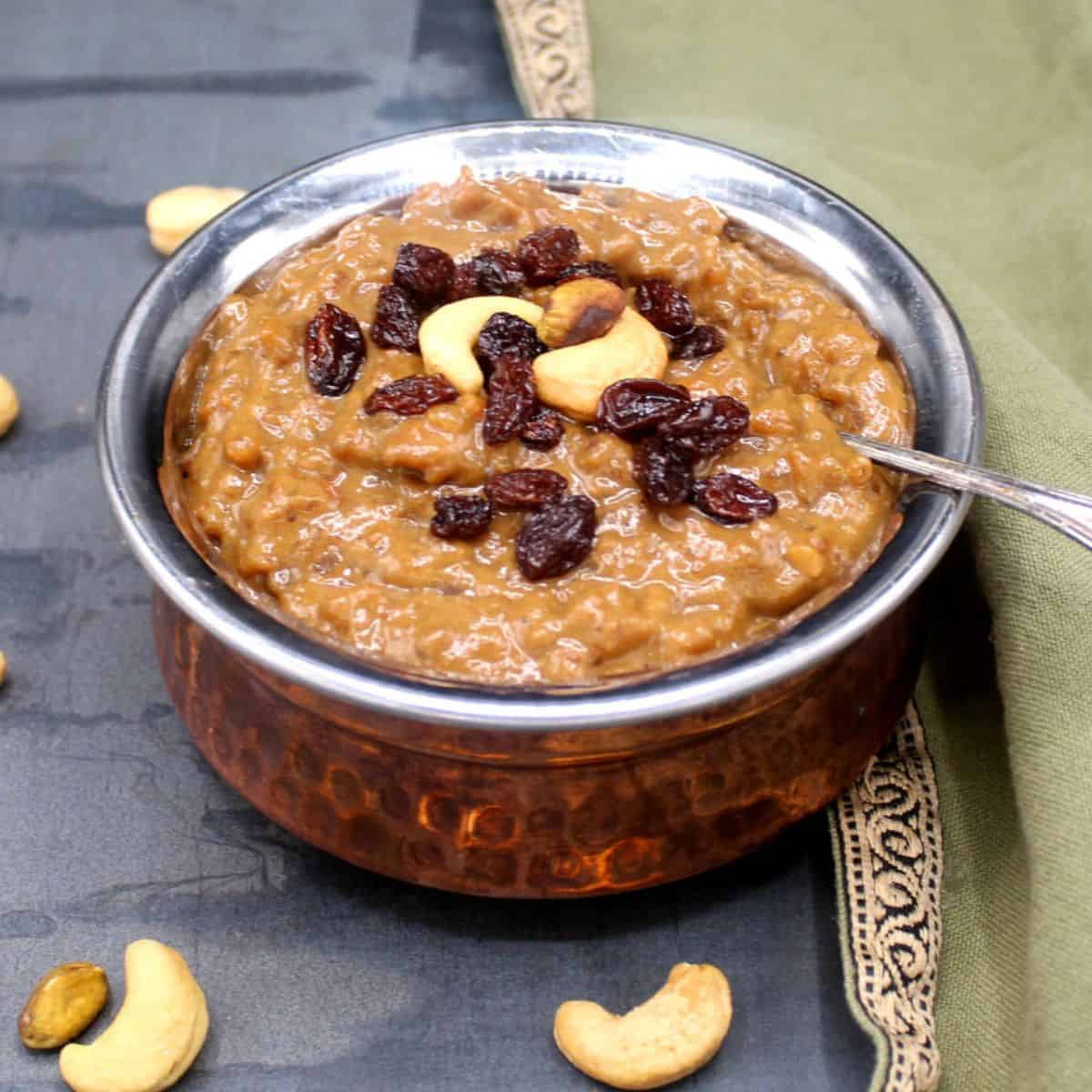
Temple Style Sweet Pongal: A Rich Festive Delight
Ingredients
- 1 cup of raw rice (measured with a 250 ml cup)
- 1/2 cup of washed moong dal
- 1.5 liters of water (for cooking)
- 1 liter of water (for additional rice cooking)
- 2 tablespoons of ghee
- 1/2 cup of ghee (for roasting)
- Cashew nuts (a handful)
- Raisins (a handful)
- 1 cup of grated dry coconut (or fresh coconut)
- 1 teaspoon of cardamom powder
- 3 to 4 cloves
- 500 grams of jaggery
- A little water (for dissolving jaggery)
Short Introduction
Pongal, especially the Temple style Sweet Pongal, is one of the most cherished traditional desserts in India. This recipe will guide you through the easy steps to create a delicious and creamy Sweet Pongal that captures the essence of festive celebrations.
Step-by-Step Method
- Preparation of Rice and Dal: Wash the 1 cup of raw rice a few times. Soak it in water and keep it aside.
- Cooking Moong Dal: In a wide and deep pot, pour the 1.5 liters of water. Add 1/2 cup of washed moong dal, mix well, and let it cook for about 15 to 20 minutes until almost cooked.
- Adding Rice: Once the moong dal is 90% cooked, add the soaked raw rice to the pot. Pour in an additional 1 liter of water to cook the rice. Mix everything well and allow to cook until the rice is creamy and well-done.
- Preparing Ghee Mixture: In a separate pan, add 1/2 cup of ghee. Roast the cashew nuts until golden, then add raisins. Once the raisins plump up, add 1 cup of grated coconut, cardamom powder, and cloves. Mix well and turn off the heat.
- Making Jaggery Mixture: In another saucepan, add 500 grams of jaggery and a little water to dissolve. Once melted, stir in the roasted mixture. Let it cook for a minute before turning off the stove.
- Combining Mixtures: Pour the jaggery mixture into the rice and dal pot. Mix well until combined and creamy. For a richer flavor, you can add an additional 2 tablespoons of ghee at this stage.
- Final Touches: Stir everything to ensure a uniform consistency, then turn off the stove and let it cool slightly.
Cooking Tips & Variations
- Ensure that the moong dal is cooked properly before adding rice to avoid uneven cooking.
- Feel free to use fresh coconut if grated dry coconut is unavailable.
- You can adjust the sweetness by modifying the amount of jaggery to your taste.
Serving Suggestions
Serve the Temple style Sweet Pongal warm, garnished with additional roasted nuts and a drizzle of ghee. It’s perfect for festive occasions or as a comforting dessert.
Storage Instructions
The Sweet Pongal can be stored in an airtight container in the refrigerator for up to 3 days. Reheat before serving.
Nutrition Information
Calories: Approximately 250 per serving
Protein: 6 g
Fat: 10 g
Carbohydrates: 38 g
Fiber: 2 g
FAQs
What is Pongal?
Pongal is a traditional South Indian dish made from rice and lentils, typically served during festivals and special occasions.
Can I use other types of dal?
Yes, you can substitute moong dal with other lentils, but adjust cooking times accordingly.
Is Sweet Pongal gluten-free?
Yes, Sweet Pongal is naturally gluten-free as it is made with rice and lentils.
How long can I store Sweet Pongal?
It can be stored in the refrigerator for up to 3 days in an airtight container.
Can I make Pongal vegan?
Yes, you can use coconut oil instead of ghee for a vegan version.
What occasions is Pongal made for?
Pongal is commonly made during harvest festivals and celebrations like Makar Sankranti.
How do I achieve a creamy texture?
Ensure that you cook the rice and dal thoroughly, and mixing with ghee at the end adds creaminess.
Can I add nuts or dried fruits?
Absolutely! You can customize your Sweet Pongal by adding various nuts and dried fruits.
Is it necessary to add coconut?
While coconut enhances flavor, it can be omitted if desired.
What is the significance of Sweet Pongal?
Sweet Pongal symbolizes prosperity and gratitude, particularly during harvest festivals.
