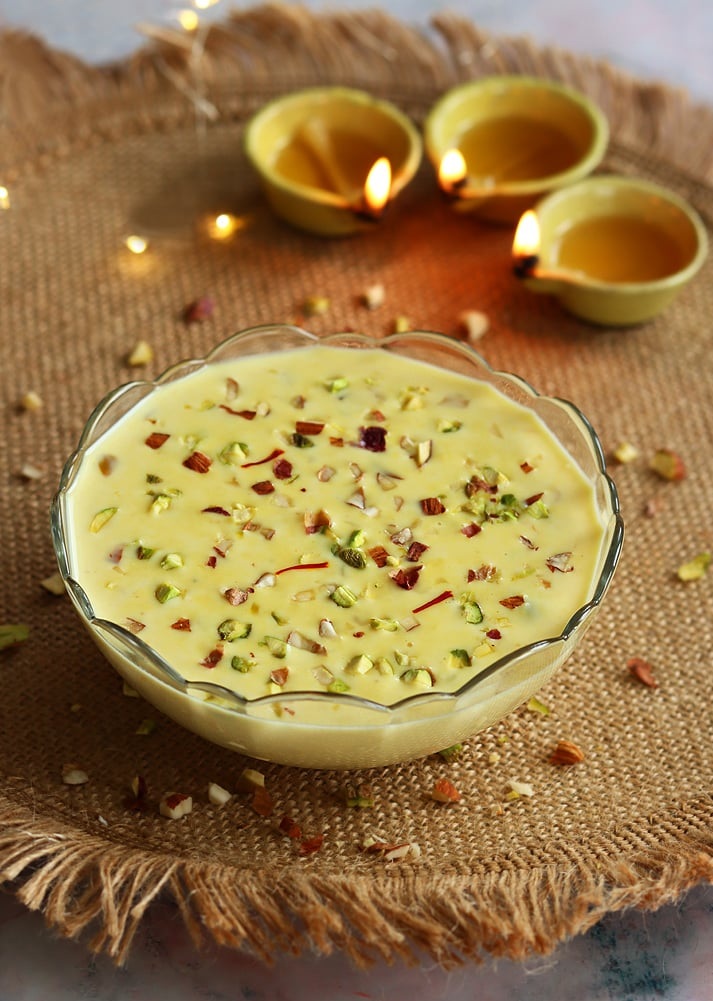
How to Make Authentic Basundi: A Traditional Indian Dessert
Basundi is a delicious and creamy Indian dessert that is especially beloved in many Indian households. Made with milk, sugar, and aromatic spices, it is perfect for special occasions and simple family gatherings alike. Let’s dive into this traditional recipe that will surely bring warmth and sweetness to your kitchen.
Ingredients
- 1.5 liters of whole milk (preferably buffalo milk for a richer taste)
- 0.5 cups of sugar (adjust to taste)
- 4-5 green cardamom pods, ground to powder
- Optional: 125 grams of khoya (dried whole milk) or 1 cup of milk powder for a quicker recipe
- Optional: Assorted nuts like almonds, pistachios for garnishing
- Optional: A few strands of saffron for extra color and flavor
Step-by-Step Method
- Start by pouring 1.5 liters of whole milk into a wide, heavy-bottomed pan. The wide pan helps the moisture to evaporate more quickly, which is essential for making basundi.
- Place the pan over medium heat and bring the milk to a gentle boil. Stir it frequently to prevent it from sticking to the bottom of the pan.
- As the milk starts to boil, you will notice cream beginning to form on the surface. Stir the milk to mix in the cream and allow it to cook until another layer of cream forms on top.
- Continue boiling the milk, stirring occasionally, until it reduces to about half its original quantity. This process will take around 30-45 minutes, so be patient!
- Once the milk has reduced, add in the sugar. If you prefer your basundi less sweet, you can adjust the sugar according to your taste. Stir well to dissolve the sugar completely.
- Next, add the cardamom powder and mix it in. At this stage, if you are using khoya, you can crumble it and add it to the mixture, stirring until it’s well incorporated.
- Cook for another 15-20 minutes, stirring occasionally to maintain the right consistency. The basundi should have a thick, creamy texture and a beautiful color.
- If desired, you can also add nuts and saffron at this point for garnish and additional flavor.
- Once done, turn off the heat. Although it may seem a bit thin now, basundi thickens as it cools down. Let it cool in the pan for a while before serving.
- You can serve basundi warm or chilled, based on your preference. It pairs wonderfully with puris or can be enjoyed on its own!
Cooking Tips & Variations
- To enhance richness, try using khoya or milk powder as mentioned. This not only speeds up the process but also adds a depth of flavor to the basundi.
- Ensure to stir the milk regularly to avoid burning at the bottom. A wooden spoon can be placed across the pan to prevent overflow.
- For a unique variation, you can add ingredients like cocoa or fruits to create a fusion version of basundi.
Serving Suggestions
Serve the basundi in small bowls, garnished with chopped nuts and a pinch of saffron. It’s ideal for festive occasions or as a comforting treat after dinner. Pair with freshly made puris for a delightful combination.
Storage Instructions
Basundi can be stored in the refrigerator for up to 3-4 days. Ensure it’s in an airtight container. You can reheat it gently before serving again, but avoid boiling as it may change the texture.
Nutrition Information
Serving Size: 100g
Calories: Approximately 150
Total Fat: 8g
Saturated Fat: 5g
Cholesterol: 30mg
Sodium: 50mg
Carbohydrates: 15g
Sugars: 10g
Protein: 5g
FAQs
What is basundi?
Basundi is a traditional Indian dessert made from thickened milk, sugar, and flavored with cardamom, often garnished with nuts.
Can I use any type of milk for basundi?
While buffalo milk is preferred for its creaminess, whole milk works fine for making basundi too.
How long does it take to cook basundi?
It typically takes about 45 minutes to an hour to prepare basundi, depending on the heat and evaporation rate.
Can I add flavors?
Yes, you can add flavors such as saffron, vanilla, or even chocolate to basundi for a twist.
What nuts can I use for garnish?
Almonds and pistachios are commonly used, but you can also use cashews, walnuts, or any nuts you prefer.
Is there a vegan version of basundi?
Yes, you can use almond or coconut milk, and replace sugar with jaggery or other sweeteners for a vegan version.
How can I thicken my basundi if it is too runny?
Cook it longer on low heat to allow more moisture to evaporate and thicken.
What is the best way to store leftover basundi?
Store it in an airtight container in the refrigerator for up to 4 days. Reheat gently before serving.
Can I serve basundi warm?
Absolutely! Basundi is delicious both warm and chilled.
What occasions is basundi commonly served?
It is often served during festivals, celebrations, and special family gatherings.
